Voicemail Service for Cloudflare Workers
Cloudflare Workers voicemail service using Twilio webhooks, R2 storage, OpenAPI routing, and serverless recording workflows.
Problem Statement
Businesses and individuals need a reliable, scalable voicemail solution that can handle incoming calls, record messages, store them securely, and provide easy access to recordings. Traditional voicemail systems often require expensive infrastructure, complex setup, and lack modern features like programmatic access and cloud storage integration.
Solution Architecture
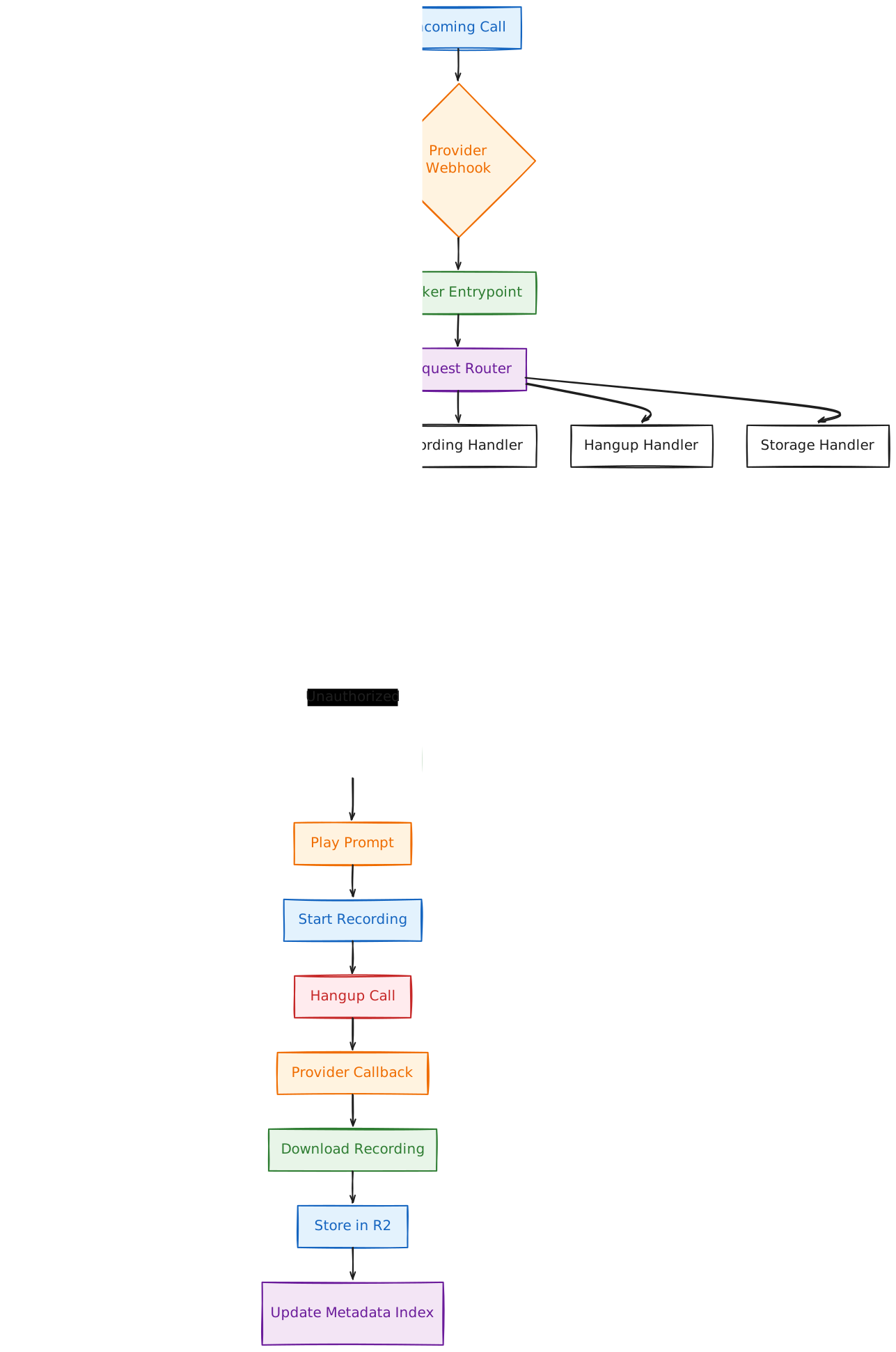
The Voicemail Service for Cloudflare Workers provides a serverless voicemail solution built on Cloudflare’s edge network. The service follows this architecture:
Technical Implementation
Core Components
- Request Router (
index.ts): Main application entry point with OpenAPI setup using Chanfana - Endpoint Handlers (
endpoint/): Individual API endpoints for handling different call flow stages - Provider Abstraction (
lib/providers/): Extensible architecture for voice service providers (currently Twilio) - Configuration Management (
lib/config.ts): Centralized environment variable handling - Type System (
types.ts): TypeScript interfaces and Zod schemas for validation - Storage Layer: Direct integration with Cloudflare R2 for recording storage
Detailed Workflow
-
Call Reception & Authorization
- Incoming call triggers webhook to
/incomingendpoint - Service validates caller number against authorized list
- Authorized callers redirected to menu system (planned feature)
- Unauthorized callers proceed to voicemail recording flow
- Incoming call triggers webhook to
-
Recording Initialization
- Request to
/recordendpoint generates appropriate TwiML - Plays configured prompt (audio file or text-to-speech)
- Initiates voice recording with specified parameters (max length, etc.)
- Request to
-
Call Completion
- Request to
/hangupendpoint terminates the call gracefully - Returns hangup TwiML to end the call session
- Request to
-
Recording Storage
- Provider sends recording completion callback to
/storeendpoint - Service downloads recording media from provider
- Stores recording file in Cloudflare R2 bucket
- Updates central metadata index with call details
- Provider sends recording completion callback to
Key Implementation Details
- Runtime: Cloudflare Workers for global edge deployment
- Framework: Hono web framework with Chanfana for OpenAPI support
- Storage: Cloudflare R2 for durable object storage of recordings
- Validation: Zod for runtime type checking and validation
- Voice Processing: Twilio SDK for call handling and TwiML generation
- Testing: Vitest with comprehensive test coverage
- Type Safety: Strict TypeScript configuration throughout
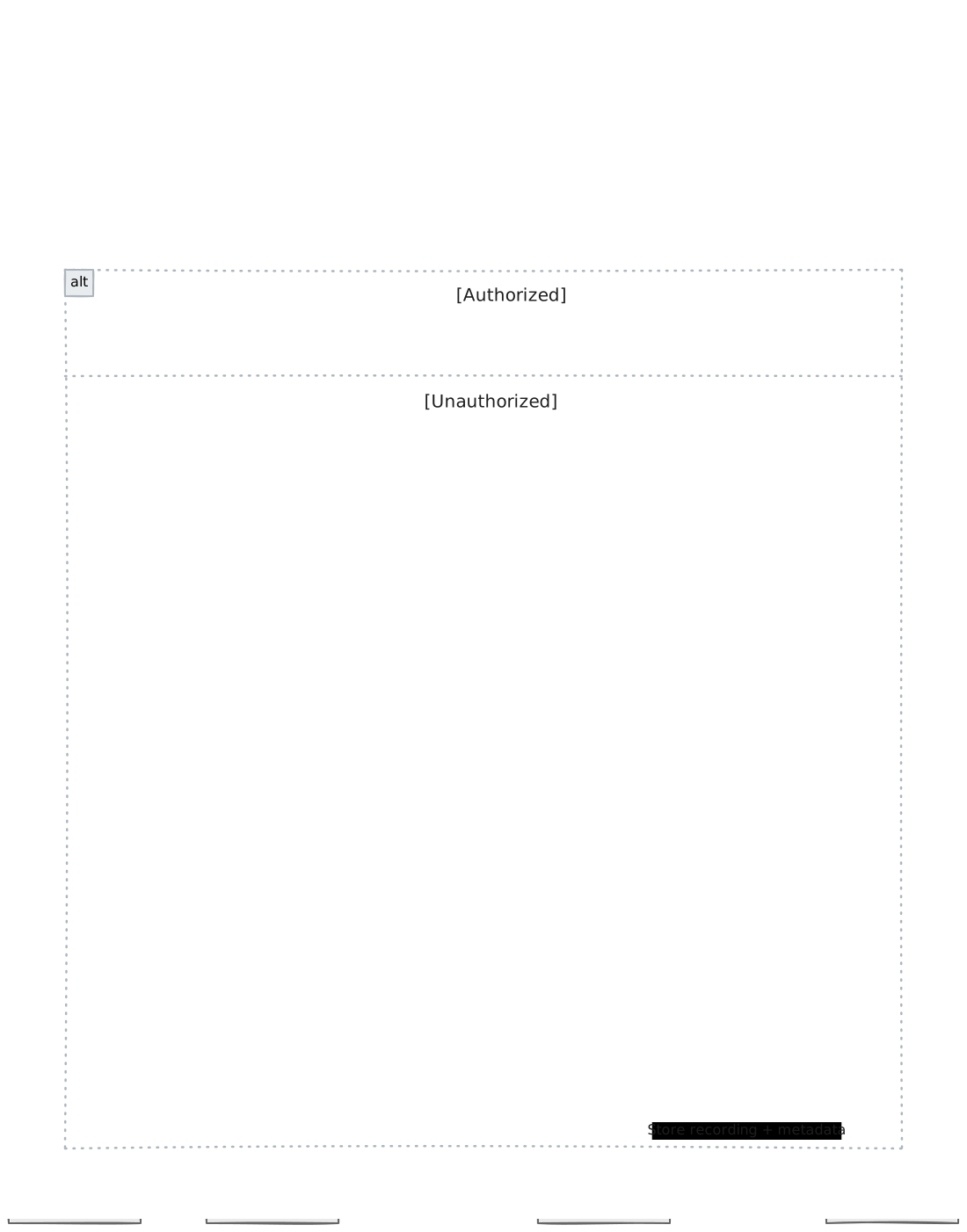
Data Flow Diagram
Dependencies
Production Dependencies
hono: Lightweight, fast web framework built for Web Standards@hono/zod-validator: Zod middleware for Hono for request validationchanfana: OpenAPI generator for Hono with Swagger UIzod: TypeScript-first schema validation with static type inference@cloudflare/kv-asset-handler: For serving static assets in Workerstwilio: Twilio SDK for voice communications
Development Dependencies
vitest: Fast Vite-native test runner@vitest/coverage: Coverage reporting for Vitesttypescript: For type-safe development@types/node: TypeScript definitions for Node.jswrangler: Cloudflare Workers CLI for deployment and developmentpnpm: Fast, disk space efficient package manager
Technical Limitations & Considerations
Provider Limitations
- Currently only supports Twilio as the voice provider
- Adding new providers requires implementing the
BaseProviderabstract class - Provider-specific features may not be uniformly supported across all implementations
Storage Considerations
- Recording storage relies on Cloudflare R2 which has its own pricing model
- Metadata index (
index.json) could grow large with high volume usage - No built-in cleanup mechanism for old recordings (planned feature)
Rate Limiting
- Subject to Twilio’s rate limits and Cloudflare Workers limits
- No built-in rate limiting for API endpoints (could be added as middleware)
- Concurrent call handling limited by Worker instance concurrency
Use Cases
Business Applications
- Customer Support: Capture after-hours voicemails for support teams
- Sales: Record sales inquiries and follow-up messages
- Appointments: Voicemail-based appointment scheduling systems
- Feedback Collection: Automated collection of customer feedback
Technical Applications
- Voice APIs: Programmable interface for voice recording and retrieval
- Integration Hub: Connect voicemail system with CRM or ticketing systems
- Analytics Pipeline: Feed voicemail metadata into analytics systems
- Transcription Services: Combine with speech-to-text for searchable voicemails
Personal Applications
- Personal Voicemail: Replace traditional carrier voicemail with cloud solution
- Call Screening: Customizable voicemail based on caller ID
- Message Archiving: Permanent storage of important voice messages
Architecture Deep Dive
Module Responsibilities
index.ts (Entry Point)
- Sets up Hono application with middleware
- Registers all API routes with OpenAPI documentation
- Configures error handling and CORS policies
- Exports the default Worker handler
endpoint/ (API Handlers)
health.ts: Simple health check endpoint for monitoringincoming.ts: Handles incoming call routing and authorizationrecord.ts: Generates TwiML for recording prompts and initiationhangup.ts: Creates TwiML to terminate calls gracefullystore.ts: Processes provider callbacks and stores recordings
lib/providers/ (Provider Abstraction)
base.ts: Abstract base class defining provider interfaceindex.ts: Factory function and provider exportstwilio.ts: Twilio-specific implementation of provider interface
lib/config.ts (Configuration)
- Centralized environment variable validation
- Provides typed access to configuration values
- Handles default values and required variable checking
types.ts (Type System)
- TypeScript interfaces for all data structures
- Zod schemas for runtime validation of requests/responses
- Discriminated unions for provider-specific configurations
Security Considerations
- All Twilio credentials stored as Cloudflare Secrets (never in code)
- Input validation on all endpoints using Zod schemas
- Authorization check prevents unauthorized access to recording system
- No sensitive data stored in logs or error messages
- Ephemeral handling of recording data (streamed directly to R2)
Performance Characteristics
Scalability
- Automatic scaling via Cloudflare Workers infrastructure
- Global deployment reduces latency for callers worldwide
- R2 storage provides high durability and availability
Latency
- Edge execution minimizes response time for call flows
- Direct integration with Twilio reduces external dependencies
- Streaming storage to R2 avoids buffering large files in memory
Cost Efficiency
- Pay-per-execution model with generous free tier
- No idle costs when service is not in use
- Efficient resource usage minimizes compute requirements
Testing & Reliability
Test Structure
- Unit Tests: Individual endpoint and provider logic testing
- Provider-Specific Tests: Organized by provider (e.g.,
twilio/) for maintainability - Configuration Tests: Environment variable validation testing
- Mock Support: R2 bucket mocking with cloudflare-test-utils
Reliability Features
- Comprehensive error handling with graceful degradation
- Detailed logging for debugging and monitoring
- Input validation at every processing stage
- Type safety throughout prevents runtime errors
License
This project is licensed under the Apache-2.0 License - see the LICENSE file for details.
Disclaimer
This project uses the Twilio SDK for voice communications. Users must comply with Twilio’s Terms of Service and applicable telecommunications regulations in their jurisdiction.